
Season 4 · Episode 125 · Craft

The Remains of the Day: A Narrator Who Won't Admit Anything

with Kazuo IshiguroNovelist, Nobel laureate

August 12, 202602:01
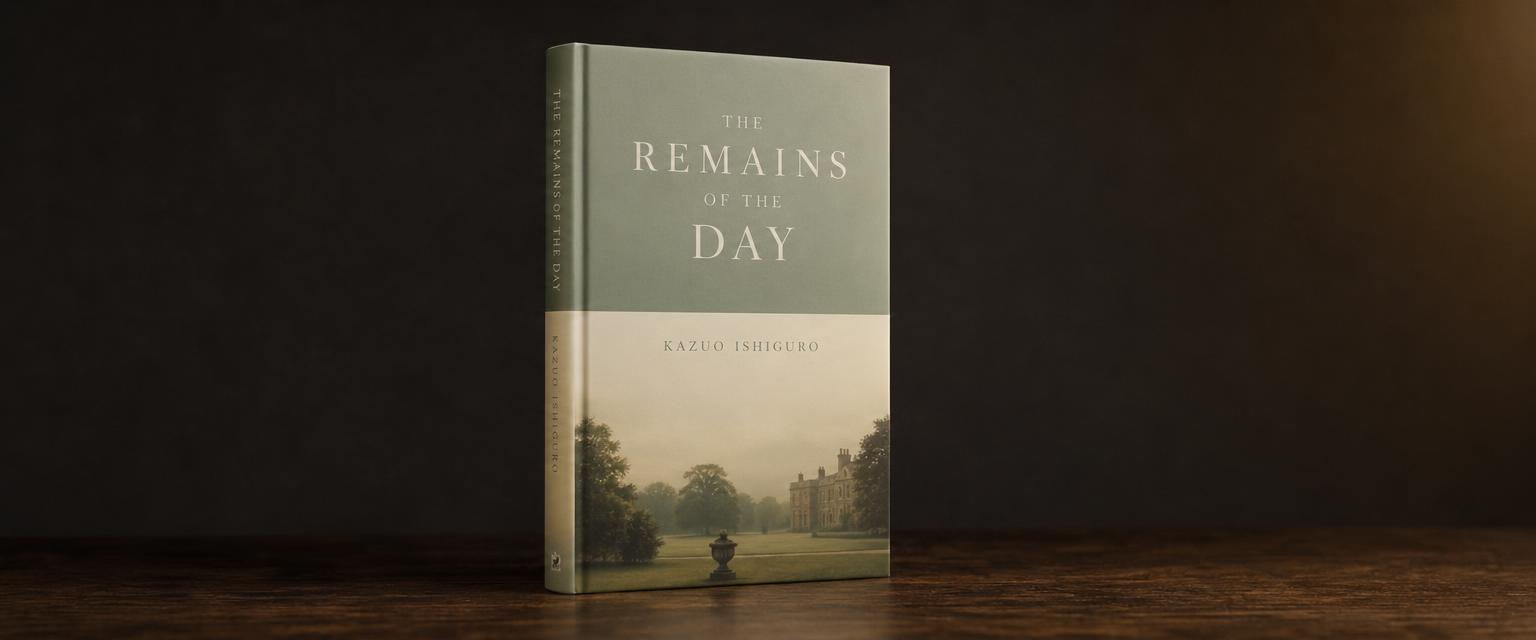
3D mock-up of the book cover for The Remains of the Day by Kazuo Ishiguro
Discussed in this episode: The Remains of the Day · Faber & Faber, 1989
00:00--:--

A two-voice studio conversation: Nora Ellis and Kazuo, with clickable questions below. Our interviews are written and voiced dramatisations, drawn from each author's publicly documented remarks on craft.

In this episode

On the four-week writing 'crash', building a narrator whose feelings are all in the silences, and why he drafts imagining a reader in translation.

The interview

Nora Ellis in conversation with Kazuo Ishiguro · click a timestamp to jump

Nora Ellis

You wrote The Remains of the Day quickly, by your own account. What made that possible?

Kazuo Ishiguro

I had spent years failing at it slowly, which people forget when they hear the fast part. My wife and I cleared four weeks. No letters, no dinners, no telephone. I wrote from nine until half past ten at night with breaks for meals. The point wasn't speed. The point was momentum — I could hold the whole book in my head at once, and the voice stayed continuous.

Nora Ellis

That voice is so restrained. How do you write a narrator who won't admit what he feels?

Kazuo Ishiguro

You write the small things he permits himself to notice, and you trust the reader to hear the enormous thing underneath. A butler will tell you the silver was polished properly on the evening his father died. If you write the grief directly, the character disappears and the author appears. The whole method is what he can't say.

Nora Ellis

Your novels return to memory and self-deception. Why that ground, again and again?

Kazuo Ishiguro

Because I don't think we can see our own lives clearly, and I find that moving rather than shameful. We arrange the past so we can carry on. I'm interested in the moment the arrangement slips — when a man realises he gave his one life to something small, and then decides to keep going anyway. That's not a tragedy exactly. It's what most people do.

Nora Ellis

Do you think about readers while drafting?

Kazuo Ishiguro

Not until quite late. Early on, thinking about readers made me polite, and politeness is fatal. Later, I read the manuscript imagining someone in another country reading it in translation. If a passage only works because of an English joke about class, I would rather it worked twice.

Nora Ellis

Advice for someone stuck on a second book?

Kazuo Ishiguro

Change something structural, not something cosmetic. Move the narrator. Move the year. If the problem were sentences, you'd have solved it already.

Keep listening

More episodes