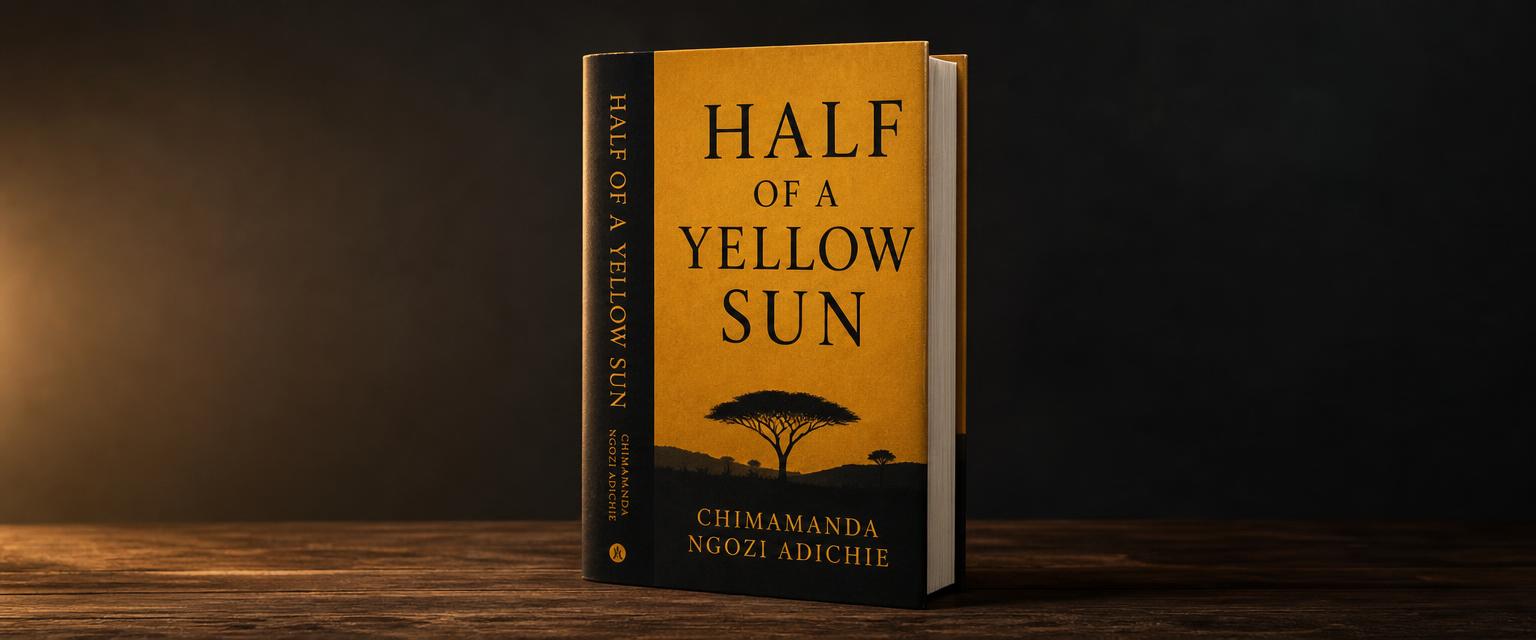

Half of a Yellow Sun: Writing a War You Were Born After
with Chimamanda Ngozi Adichie — Novelist & essayist
August 19, 202601:55
Discussed in this episode: Half of a Yellow Sun · Fourth Estate, 2006
00:00--:--
A two-voice studio conversation: Nora Ellis and Chimamanda, with clickable questions below. Our interviews are written and voiced dramatisations, drawn from each author's publicly documented remarks on craft.
Four years, one abandoned narrator and a shelf of Biafran war memoirs. Adichie on research as a cure for fear, the danger of the single story, and why she threw away two years of work.
The interview
Nora Ellis in conversation with Chimamanda Ngozi Adichie · click a timestamp to jump
Nora Ellis
You often say you were a child who read everything in the house. What did that do to you as a writer?
Chimamanda Ngozi Adichie
It made writing feel ordinary, in the best way. Books were furniture in our house, so making one didn't seem like a mystical act. It seemed like work you could learn. And because I read mostly English novels first, I also learned early that the people in books didn't look like me. That absence is what pushed me to write my own.
Nora Ellis
Half of a Yellow Sun took you four years and a great deal of research. How do you keep research from swallowing a novel?
Chimamanda Ngozi Adichie
I read until I stopped feeling afraid. That's my measure. Fear makes you over-explain, and over-explaining kills a scene. Once I could hear the way people spoke at a particular kind of dinner table in 1967, I put the books away and stayed with the characters. History gives you weather. It shouldn't give you speeches.
Nora Ellis
Was there a moment you thought the book wouldn't work?
Chimamanda Ngozi Adichie
Many. There's a version of it in a drawer with an entirely different narrator, and it was dead on the page. I had to admit that after two years. That's the part nobody tells you about: the courage isn't starting, it's throwing away the thing you have already paid for with your life.
Nora Ellis
What is writing for, for you? Not the career — the act.
Chimamanda Ngozi Adichie
To insist on complication. Single stories flatten people, and flattened people are easy to harm. When I write a character who is difficult and loving and wrong all at once, I'm arguing for that complication. That's the whole purpose, really. Everything else is publishing.
Nora Ellis
One thing to a young writer with a draft they're ashamed of?
Chimamanda Ngozi Adichie
Be ashamed later. Right now, finish the sentence. Shame is a very good editor and a very bad first drafter.
Frame stories, longhand mornings and why she'd rather be called a filing clerk than a prophet. Also: read your contracts more carefully than your reviews.
Why he shelved his best idea until he could carry it, how he rationed the research, and building a novel where every state is a different genre of America.