Sixty Years at the Desk: Margaret Atwood on Nesting a Story
with Margaret Atwood — Novelist & poet
August 5, 202601:54
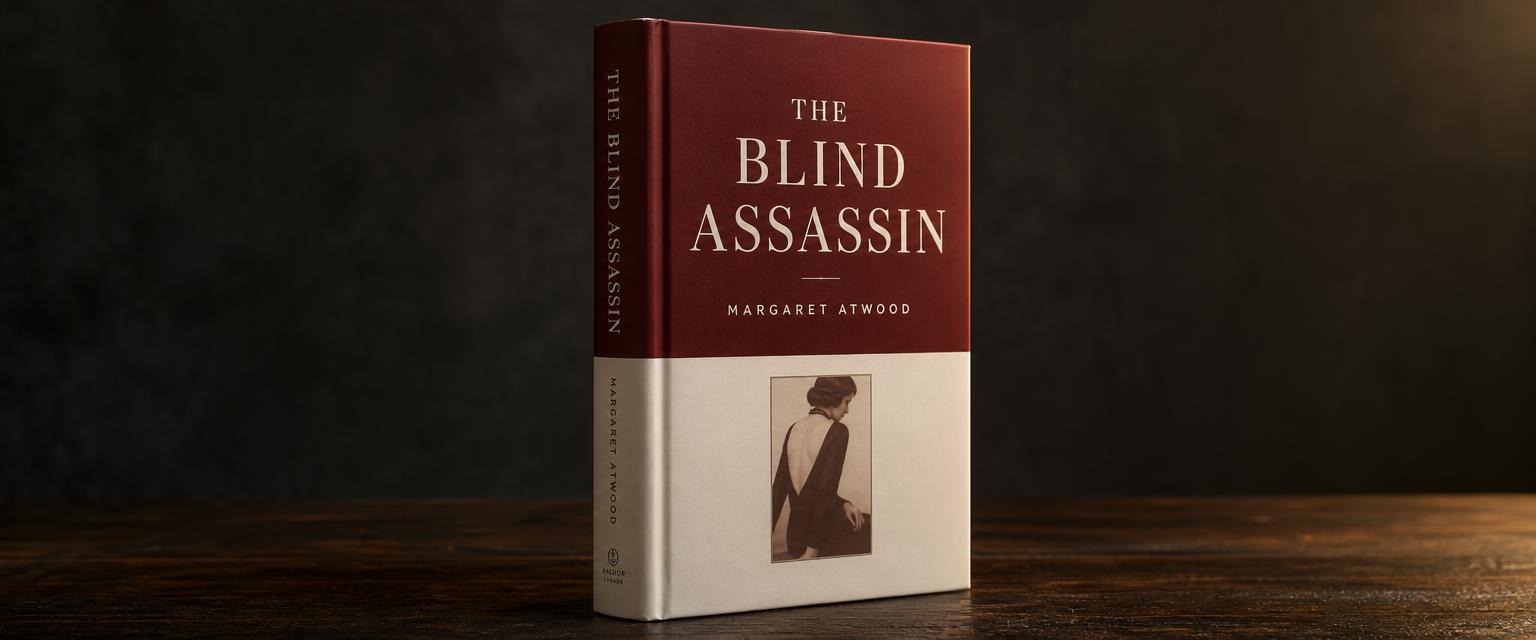
Discussed in this episode: The Blind Assassin · McClelland & Stewart, 2000
00:00--:--
A two-voice studio conversation: Nora Ellis and Margaret, with clickable questions below. Our interviews are written and voiced dramatisations, drawn from each author's publicly documented remarks on craft.
Frame stories, longhand mornings and why she'd rather be called a filing clerk than a prophet. Also: read your contracts more carefully than your reviews.
The interview
Nora Ellis in conversation with Margaret Atwood · click a timestamp to jump
Nora Ellis
You've been publishing for six decades. What has stayed the same about how you work?
Margaret Atwood
The longhand. I still start with a notebook, in the morning, badly. Bad early pages don't frighten me anymore — they're the raw material, not the verdict. What has changed is that I no longer wait for a good mood. If you wait for the muse, you'll be waiting behind a great many people.
Nora Ellis
The Blind Assassin nests one story inside another. How do you keep that from collapsing?
Margaret Atwood
You keep asking who is telling this, and why now, and who they're afraid of. A frame story is only a trick if the teller has no motive. Once the teller wants something from the listener — forgiveness, usually, or an alibi — the nesting holds. Readers are far better at tracking layers than editors fear.
Nora Ellis
Your work is often read as prophecy. Do you enjoy that?
Margaret Atwood
Not particularly. I put nothing in my speculative books that human beings haven't already done somewhere, so it isn't prophecy, it's filing. The unsettling part is not that I imagined it. It's that I only had to look it up.
Nora Ellis
What's the purpose of writing, at this point in your life?
Margaret Atwood
Curiosity, mostly, and the fact that I'm unfit for other employment. But underneath that — a book is a message in a bottle from someone who may be dead by the time you open it. Writing is how the living keep talking to strangers. It seems worth doing.
Nora Ellis
One rule for a writer starting out?
Margaret Atwood
Finish things, and keep the receipts. Read your contracts as carefully as you read your reviews — more carefully, actually.
with Chimamanda Ngozi Adichie — Novelist & essayist
Four years, one abandoned narrator and a shelf of Biafran war memoirs. Adichie on research as a cure for fear, the danger of the single story, and why she threw away two years of work.

Why he shelved his best idea until he could carry it, how he rationed the research, and building a novel where every state is a different genre of America.