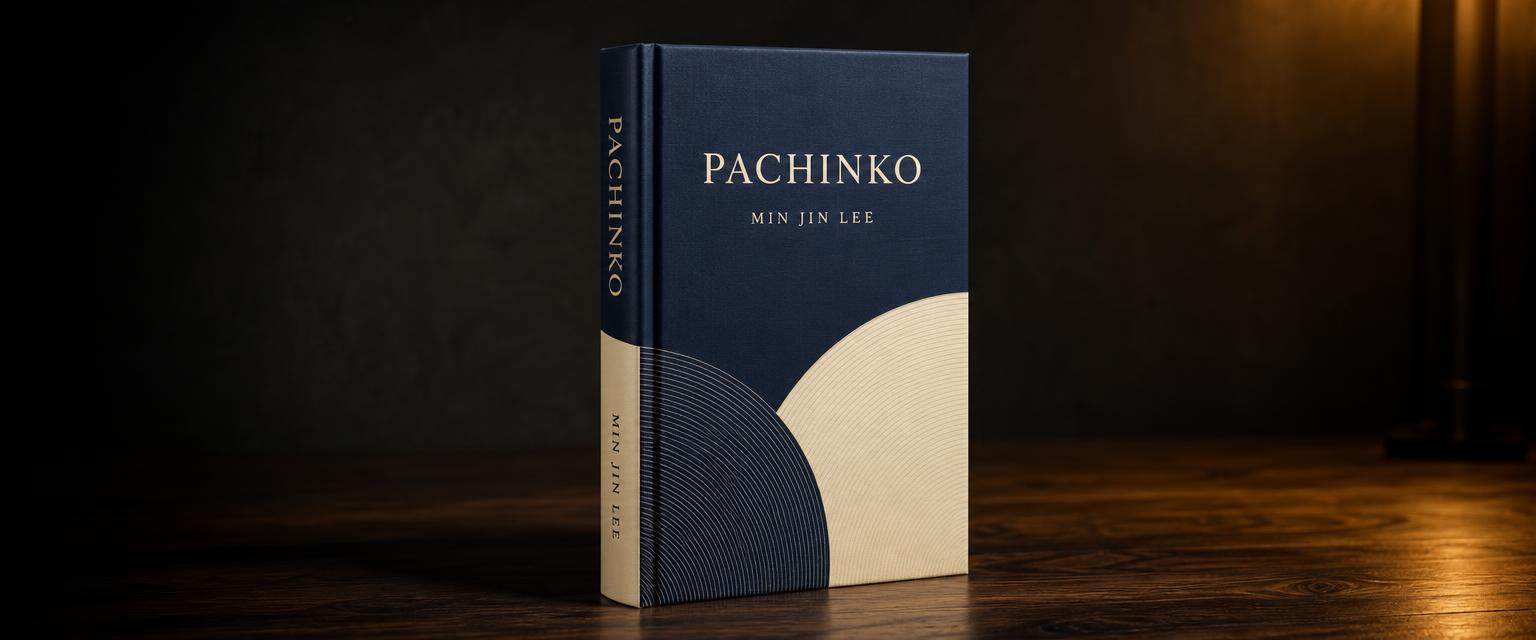

Thirty Years of Pachinko: Min Jin Lee on Failing Well
with Min Jin Lee — Novelist
July 1, 202601:52
Discussed in this episode: Pachinko · Grand Central, 2017
00:00--:--
A two-voice studio conversation: Nora Ellis and Min, with clickable questions below. Our interviews are written and voiced dramatisations, drawn from each author's publicly documented remarks on craft.
Throwing out a finished novel, over-reporting on purpose, and why patience is a craft skill rather than a virtue.
The interview
Nora Ellis in conversation with Min Jin Lee · click a timestamp to jump
Nora Ellis
Pachinko took you nearly thirty years. What were those years actually spent on?
Min Jin Lee
Failing well, mostly. I wrote a whole version in the nineties from the point of view of a single Korean-Japanese man and it was flat, because I was writing an argument, not a family. Then my husband's job took us to Tokyo and I interviewed dozens of people — and I realised the story belonged to the women. I threw out the manuscript and started again in my forties.
Nora Ellis
That's a brutal decision. How did you know it was right?
Min Jin Lee
Because the new pages were harder to write and easier to read. That's my only reliable test. When I'm defending a draft in my head, it's dead. When I'm nervous and curious, it's alive.
Nora Ellis
You trained as a lawyer. Did that help or hurt?
Min Jin Lee
It taught me research and it taught me to sit down when I don't feel like it, which is ninety percent of this job. It also gave me a healthy fear of getting facts wrong about real people's suffering. I over-report. Then I let the reporting sink under the surface so the reader only feels the weight.
Nora Ellis
Why write at all?
Min Jin Lee
Because ordinary people are historically invisible, and I find that unbearable. A woman selling kimchi in a market in Osaka is carrying an entire century. If I do my work properly, a reader in Ohio who has never thought about Korea for a minute of her life will grieve for her. That transaction is, to me, the point of the form.
Nora Ellis
Advice for a writer holding a manuscript nobody wants yet?
Min Jin Lee
Keep it, keep going, and get older. Patience is an underrated craft skill — some books need the writer to become a different person first.
with Chimamanda Ngozi Adichie — Novelist & essayist
Four years, one abandoned narrator and a shelf of Biafran war memoirs. Adichie on research as a cure for fear, the danger of the single story, and why she threw away two years of work.

Frame stories, longhand mornings and why she'd rather be called a filing clerk than a prophet. Also: read your contracts more carefully than your reviews.