Fusion Fiction: Bernardine Evaristo on Twelve Voices and No Full Stops
with Bernardine Evaristo — Novelist & professor
July 15, 202601:49
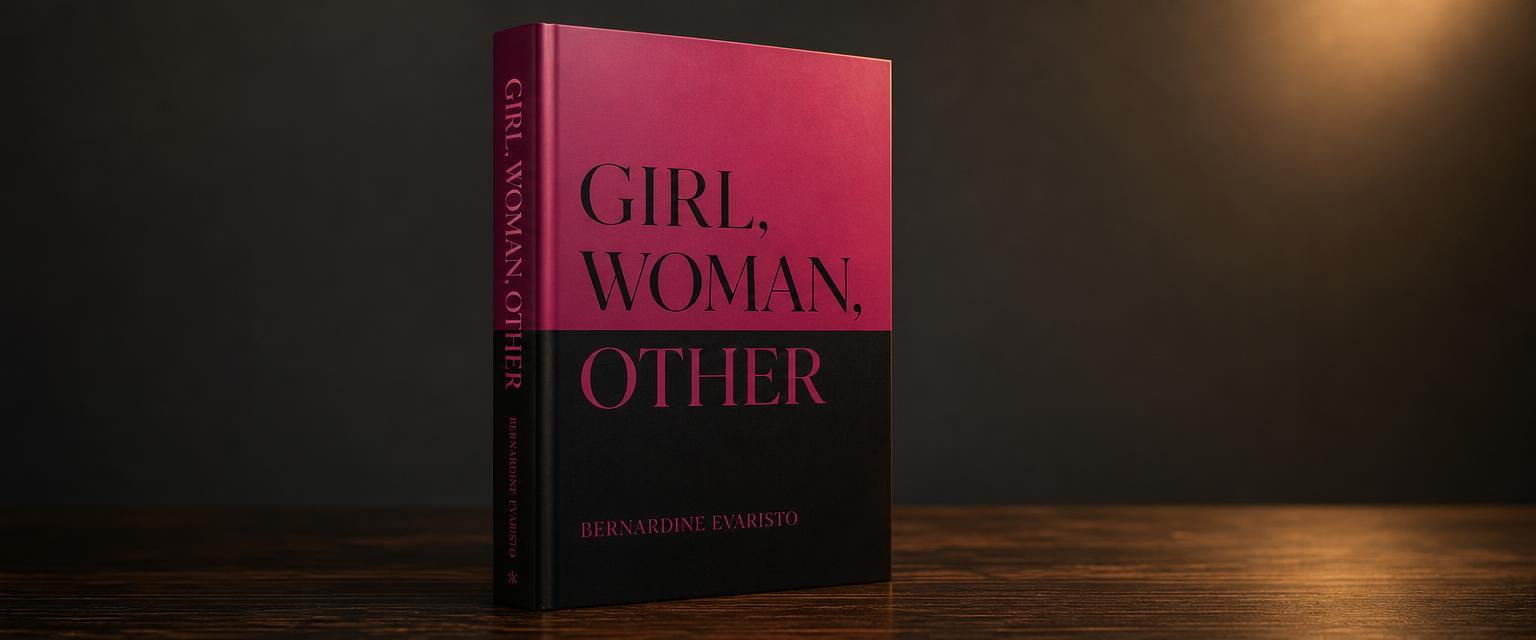
Discussed in this episode: Girl, Woman, Other · Hamish Hamilton, 2019
00:00--:--
A two-voice studio conversation: Nora Ellis and Bernardine, with clickable questions below. Our interviews are written and voiced dramatisations, drawn from each author's publicly documented remarks on craft.
Forty years of building instead of waiting to be discovered, writing twelve interlocking lives, and why she has no interest in a 'worthy' book.
The interview
Nora Ellis in conversation with Bernardine Evaristo · click a timestamp to jump
Nora Ellis
You published for decades before the Booker. What kept you working through the quiet years?
Bernardine Evaristo
Sheer bloody-mindedness, and a community. I came from theatre, so I never expected to be discovered — I expected to build. I ran my own company, I toured, I taught. The prize arrived when I was sixty and by then I had eight books and no illusions. That's actually a very safe way to receive good news.
Nora Ellis
Girl, Woman, Other has twelve central characters and almost no full stops. How did that form arrive?
Bernardine Evaristo
I call it fusion fiction. I wanted the rhythm of poetry with the reach of a novel, so I dropped most of the punctuation and let the line breaks carry the breath. And twelve characters because one Black British woman cannot represent all of us. Put twelve in a book and the reader can't reduce any of them to a type.
Nora Ellis
How do you keep twelve voices distinct?
Bernardine Evaristo
I write each one's history far beyond what's on the page — where they went to school, what they're embarrassed about, what music was playing when they were nineteen. Ninety percent never appears. But you can hear the difference between a woman who has been listened to all her life and one who hasn't, and that's in the sentence shape, not the dialect.
Nora Ellis
What's the purpose of the work for you now?
Bernardine Evaristo
To put people into literature who were left out of it, and to enjoy myself doing it. I'm not interested in worthy books. I want them alive, funny, argumentative — the way a room full of women actually sounds.
Nora Ellis
Advice to a writer who feels they've started too late?
Bernardine Evaristo
There is no timetable. The only thing that disqualifies you is stopping.
with Chimamanda Ngozi Adichie — Novelist & essayist
Four years, one abandoned narrator and a shelf of Biafran war memoirs. Adichie on research as a cure for fear, the danger of the single story, and why she threw away two years of work.

Frame stories, longhand mornings and why she'd rather be called a filing clerk than a prophet. Also: read your contracts more carefully than your reviews.